
Today, a brand’s efforts to modernize and stay relevant are closely tied to its sustainability effort. Hospitality brands are no exception.
As business enterprises are pressed to heed the rising awareness of planetary impact, hotels have a significant responsibility to rise to the occasion. Some have found unique ways to meet these new demands. From simple everyday transitions (e.g. eliminating single-use plastic, installing bike racks) to longer-term planning efforts (overhauling building operations plans, tracking waste output and energy metrics), hospitality brands are continuing to explore innovative solutions for a greener tomorrow.
What does this look like today?
Why Eco-Friendly Hotels Matter
The hospitality industry generates considerable environmental impact–contributing about 1% of the global carbon footprint–and thus has a massive responsibility to reevaluate its practices. Given its high use of energy and water, and rapacious drain on local resources, hospitality’s carbon footprint is alarmingly far-reaching.
Nevertheless, experts offer some hope. By reexamining traditional (yet dated) industry operational practices, researching and investing in worthwhile innovations, and implementing these changes without sacrificing profitability or growth, this industry can reverse its detrimental impact and work toward a more productive one.
According to the World Sustainable Hospitality Alliance, the hospitality world has major work to do. Big picture, this will mean “[reducing] emissions by 66% by 2030, and 90% by 2050…to ensure that the growth forecast…does not lead to a corresponding increase in carbon emissions.”
Inventive Solutions
Major brands like Marriott and Hilton have developed their own methods to invest in a greener future. The former has implemented Serve360, an initiative to “nurture, sustain, empower, and welcome.” Initiatives include investing in the local community, operating more responsibly, partnering with nonprofits to boost diversity and ensure workplace readiness, and tracking and publishing goals and performance.
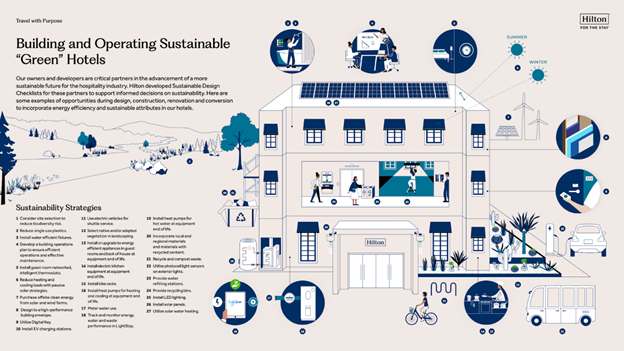
The latter, Hilton, has developed and published an extensive calls to action list to help hotel owners, developers, and their staff plan for and roll out a comprehensively greener overhaul. Such planning efforts establish a complete head-to-toe conversion meant to strategize, optimize, and implement eco-friendly alternatives. The example shown below vary from layered minutia to long-term strategy, from products used to business partners to transition plans to more efficient equipment.
Shifting Consumer Priorities
As awareness for sustainability grows, so also does the value that consumers place on such practices. A rising number of hotel guests– particularly the blossoming young adult Gen Zers–expect far more from the businesses they choose to support. They are aware that they are more exposed to advertising efforts from more brands; they also have vastly different priorities and influences surrounding their purchase behavior.
Gen Z looks for greater transparency and authenticity from brands. And given this demo’s purchasing power (projected to hit a staggering $12 trillion globally by 2030), brands fail to heed these wishes at their own peril.
Sustainable Practices to Implement
According to the World Travel & Tourism Council (WTTC), here are some of the most impactful eco-friendly changes hotels can (and should) make:
Major hotel brands such as Marriott, Hilton, IHG, and Wyndham have already created mandated programs for tracking these energy segments within their operating systems. However, these programs are not always followed with care by the property level teams or strictly enforced by the brands to ensure true movement towards more effective outcomes. Currently, most of all the identifying and measuring through dashboards and utility invoices is more so to “check the box” than to create real change for the environment.
For hotels that evolve in step with a more sustainable future, they’ll achieve far more than relief to the environment. These brands also stand to appeal to the shifting “new traveler” priorities, and as a result, achieve long-term profit from making more sustainable investments.

© The Hotel Insider. All rights reserved. Website by Air Spark